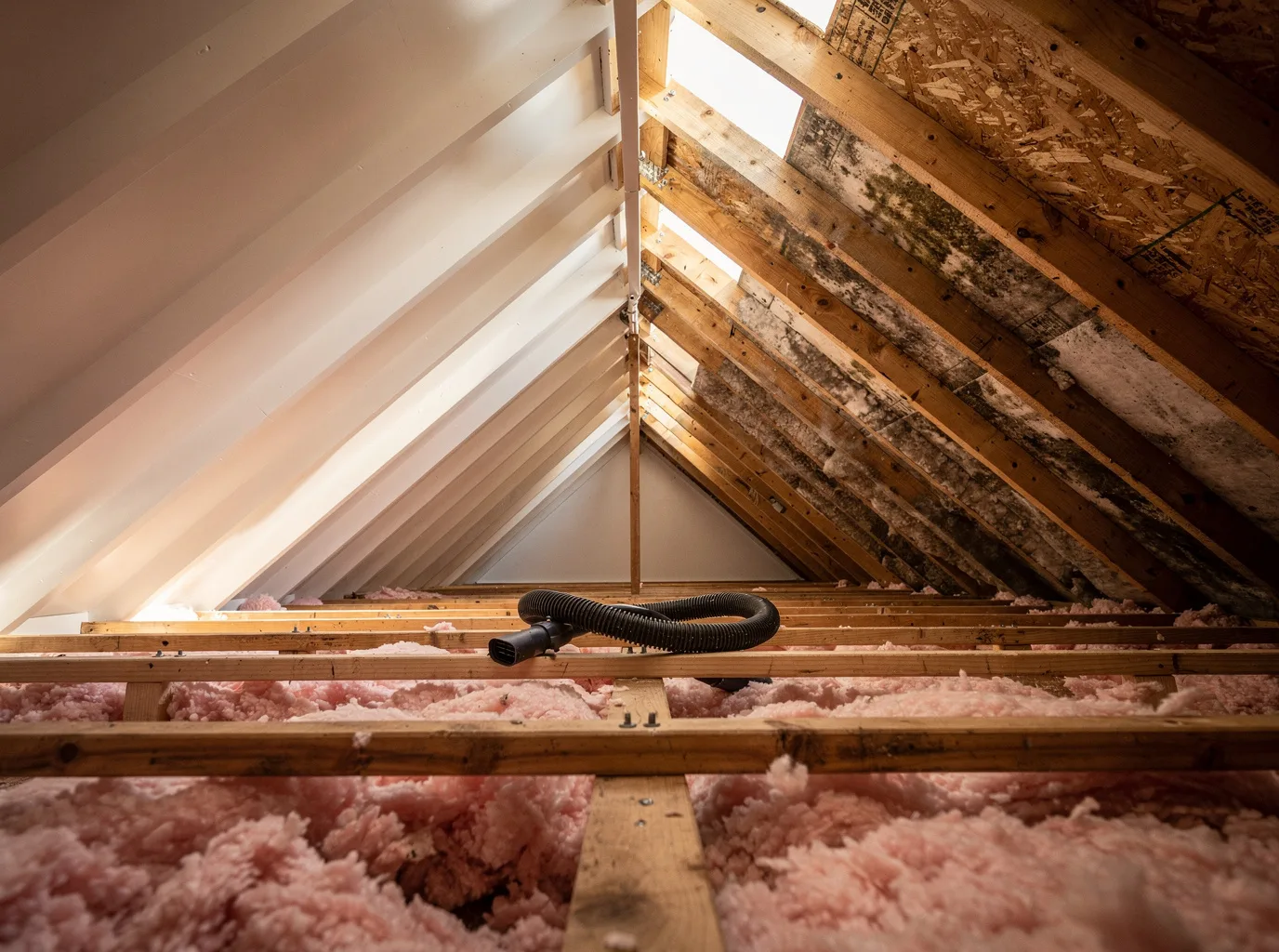
Mold doesn't need a flood. It needs material that stays wet for roughly 24 to 48 hours. After a pipe leak, a water heater failure, an overflowing tub or a storm, any drywall, carpet pad, insulation or wood that didn't dry fast enough is a candidate. Mold removal after water damage in Cantril, IA focuses on finding that growth and removing it once the water itself is gone.
Where mold hides after water damage
Surfaces often look dry within a day or two while the materials underneath stay wet. The places growth turns up later:
- The back side of drywall and inside wall cavities, especially at the bottom plate
- Carpet pad and tack strip, and the subfloor under them
- Under and behind kitchen and bathroom cabinets, where toe kicks trap moisture
- Fiberglass insulation in walls and ceilings below the leak
- Hardwood flooring, which may cup and hide growth on its underside
Thermal imaging and a moisture meter find these spots without tearing everything open. Our page on mold inspection describes the tools.
What the crew does
This service picks up where the water cleanup ended, or where nobody did one. The crew maps moisture, sets containment around affected areas, and runs HEPA air scrubbers. Porous materials with growth come out: drywall cut at least a foot past the wet line, pad, insulation, sometimes cabinet backs. Framing and subfloor get HEPA vacuumed, cleaned and dried. Readings are rechecked until wood is back in the normal range. If the growth is mostly inside walls, see drywall mold removal.
Timing matters
The sooner materials are dried, the less there is to remove. Growth found a week after a leak is often limited to the surface. Growth found months later, behind a wall that was never opened, usually means more tear-out. If your leak happened a while ago and you were never sure it dried out, testing or an inspection is a reasonable first step.
Cost and insurance
Cost depends on how much material is affected, how long it stayed wet, and access. Homeowner policies vary a lot on mold. Many cover mold that results from a sudden covered event, like a burst pipe, and exclude mold from long-term leaks or humidity, often with a coverage cap. Read your policy, take photos before work starts, and keep moisture readings and reports. A clearance report at the end is useful for the file.
One practical point: if the water cleanup was done by someone else, ask for their drying logs. Readings taken during drying show which areas were slow to dry, and those are exactly where a mold crew should look first.
Call (984) 230-5534 and we will connect you with a local company that handles mold after a leak in Cantril, IA.